Knowing what to expect makes the first step lighter.
From your first message to the rhythm of ongoing work, here is how therapy with me unfolds.
Reaching out is the hardest part. This page carries the rest.
Reaching out to a therapist when you’re already worn down can feel like one more thing on a list that’s far too long. If you’ve read this far while running on empty, that already takes something.
So here’s the whole path, with nothing hidden: what happens when you send a message, what the first session actually feels like, and how the work settles into a rhythm after that. You do not need the right words. You do not need to have any of it figured out. You only need to begin.
No surprises, no scripts, no need to arrive knowing what to say.
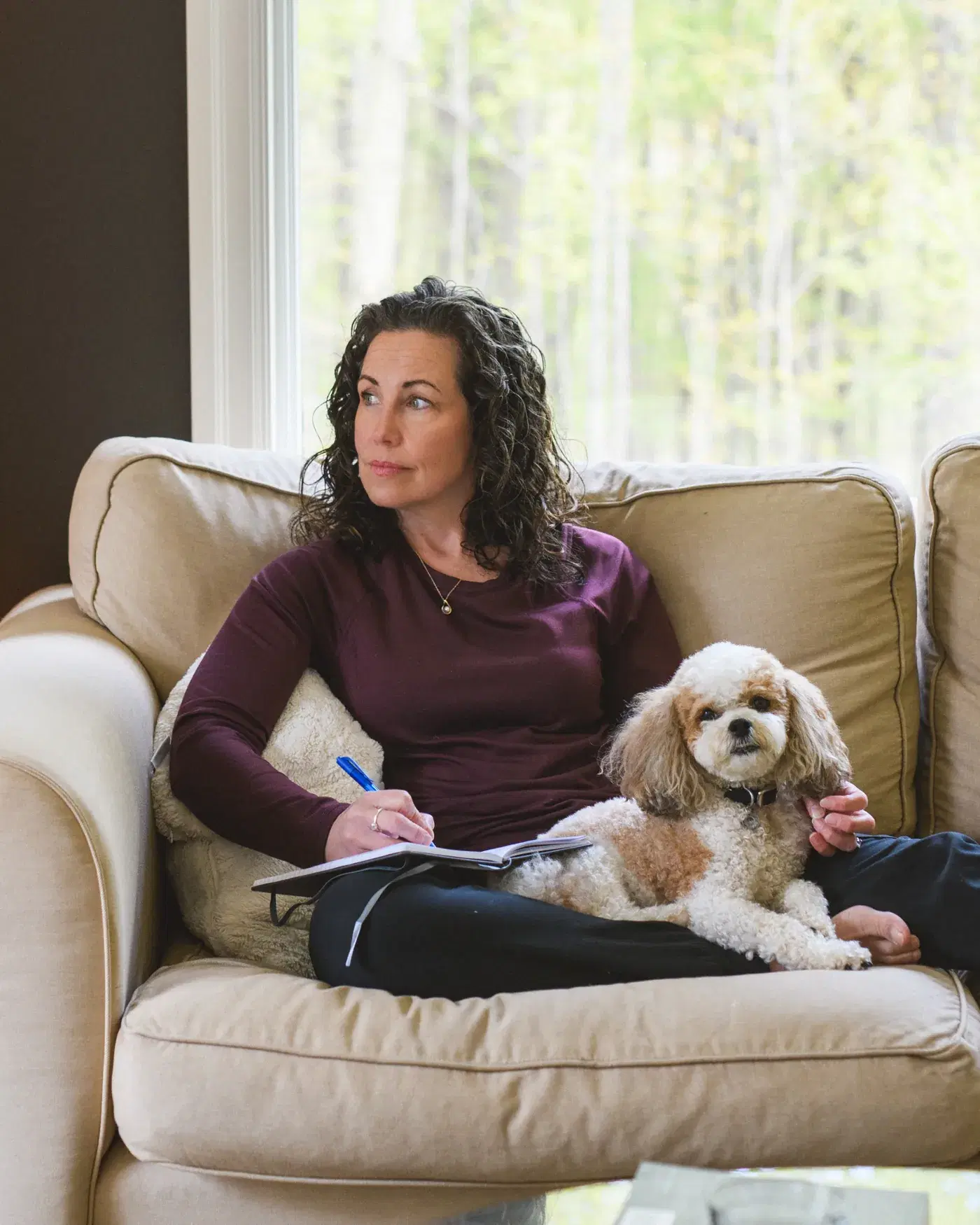
What working together looks like, step by step.
Three stages, from the first hello to the rhythm we settle into. No part of it asks you to arrive with the right words.
We start with a free 15-minute phone call.
Before any first session, we have a short phone conversation. You tell me what’s going on, what you’re hoping for, and what has been hardest. I tell you a little about how I work and what therapy with me actually looks like.
The call is for both of us. It gives you a feel for whether I’m someone you could talk to, and it gives me a sense of whether I’m the right person for what you’re carrying. If I’m not, I’ll tell you, and where I can, I’ll point you toward someone who might be a better fit. If we are a fit, we book your first session. No paperwork at this stage, and no commitment.
Your first session, at the pace you set.
The first session is for laying the groundwork, so we slow down. Before anything else, we make the room feel safe, physically and emotionally, because nothing meaningful happens until your body and mind have settled into it. We will not go near your hardest material before you’re ready.
I’ll walk you through what therapy with me tends to look like. I’ll ask what brings you here, what you’ve already tried, and what you’re hoping might shift. You lead. I follow with support, at the pace your nervous system can actually hold.
How the work settles into a rhythm.
After the first session, the work finds its own pace. Some weeks we go deep; some weeks we steady. We go slowly on purpose, more slowly than most people expect, because going slow is how the work actually holds. Small shifts, made gently, are the ones that last.
Everything from here rests on three things your nervous system needs in order to feel safe enough to change: context, connection, and choice.
Context, connection, and choice.
These aren’t a technique I apply to you. They’re the conditions that let real change feel safe, and they run underneath everything we do together.
Context
You always know what to expect. I won’t surprise you with sudden changes in direction. When I see a fork in the road, I name it and ask which way you want to go.
Connection
We’re building a relationship, not running a protocol. You will never be a case file to me. The work is shaped by you, by what you bring in and what matters most.
Choice
You lead. You decide what to talk about, what to leave for now, when to go deeper, and when to pause. I bring the clinical leadership; you set the direction. We go slow when slow is what’s needed, which is more often than people expect.
Everything you’d want to know before you book.
The ordinary, useful particulars, so there’s nothing left to wonder about.
- Session length
- 50 minutes for individual and two-parent sessions.
- Where we meet
- In person on Tuesdays at Southern Ontario Counselling Centre, 1760 Erb’s Road East in St. Agatha, about five minutes from Waterloo. Virtual sessions through secure video throughout the week, available across Ontario.
- Fees
- $150 for a 50-minute individual session. $175 for a 50-minute two-parent session.
- Payment
- Cash, e-transfer, Mastercard, or Visa. A receipt is issued for every session.
- Insurance
- I provide receipts that you submit to your own insurer. Many third-party plans cover services from a Registered Social Worker (RSW). It is your responsibility to confirm with your insurer how much is covered per session and per year, and whether a referral is required for coverage.
- Referrals
- A referral is not needed to see me. Your insurance provider may still require one before they will reimburse you.
- Cancellations
- I do not charge for late cancellations. Life with children is unpredictable, and I do not want anyone showing up to a session when it is really inconvenient. Any notice you can give helps me put that time to use. Sessions missed without notice are charged.
- Crisis support
- I am not a crisis service. If you or someone you love is in immediate danger, please contact a crisis line, your local emergency room, or 911.
A few places to look next.
If you want a little more before reaching out, these tend to be the most helpful next reads.
Ready to start a conversation?
Every new client starts with a free 15-minute phone call. We talk about what’s going on, what you’re hoping for, and whether we’re the right fit. No paperwork. No pressure.